
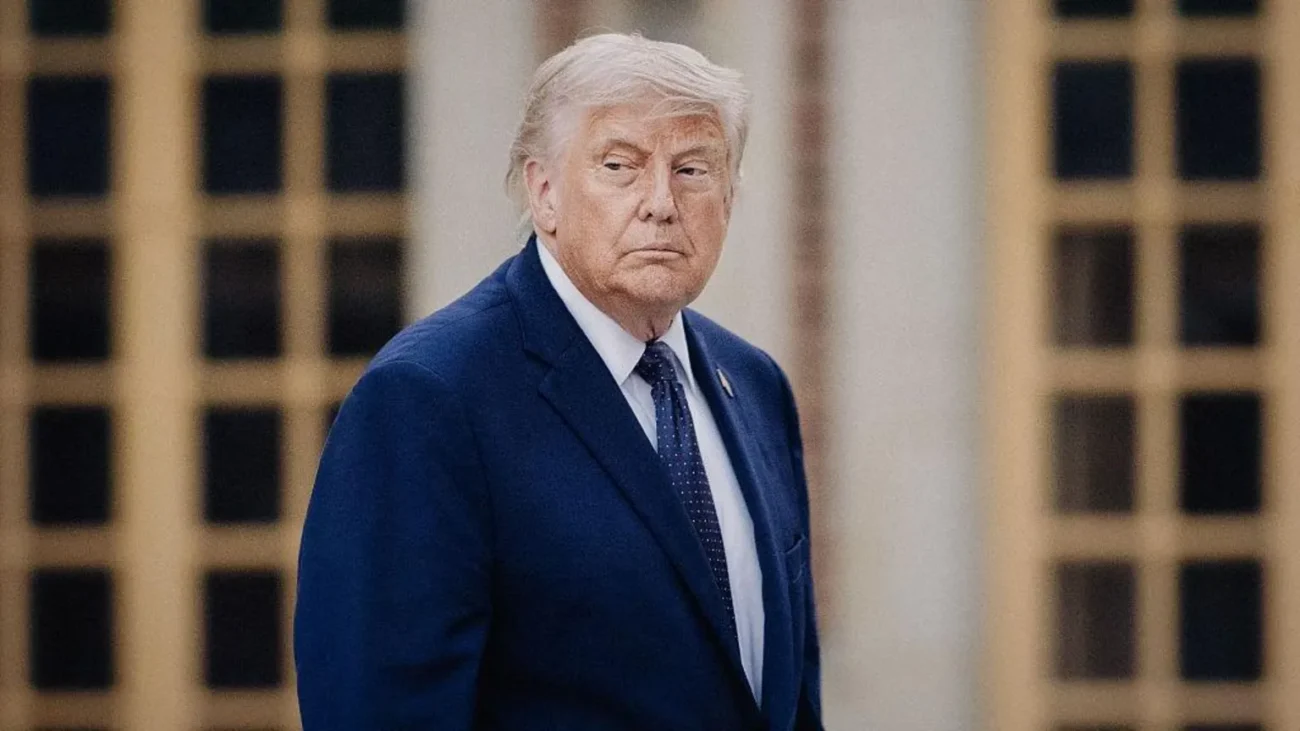
The Republican-controlled US Senate has approved a measure instructing President Donald Trump to halt the war in Iran or seek congressional approval before continuing military action.
A handful of Republicans joined Democrats in Tuesday’s 50-48 vote. The same measure was passed by the US House of Representatives earlier this month.
But the resolution is largely symbolic because, even after passing both chambers of Congress, it will not be sent to Trump for his consideration and does not carry the force of the law.
It came as Republicans in Congress have expressed scepticism about a peace plan Trump agreed with Iran, and the unpopular conflict approaches its fifth month.
UN says it will evacuate sailors stranded in Strait of Hormuz, as Rubio warns against tolls
Trump criticised the resolution on Tuesday night, calling it “poorly timed and meaningless”.
“So, I have Iran on the ‘ropes,’ ready to go down for the fall… and the U.S. Senate decides to have a poorly timed and meaningless War Powers Act Vote,” Trump wrote on his Truth Social platform.
“These Senators have just made my job more difficult, but I will get it done, one way or the other, because I always get it done!”
The vote marks the first time that both chambers of Congress have approved a concurrent resolution instructing a president to end a military action since the War Powers Resolution of 1973 was enacted.
A concurrent resolution expresses the sentiment or will of Congress, as opposed to other forms of legislation that go to the president to be signed into law. In 2019, Trump vetoed a joint resolution that called for the removal of armed forces from hostilities in the Yemeni civil war.
Middle East analyst Laura Blumenfeld called it “more of a slap on a wrist than a handcuff, because it has no legal binding”.
But she told the BBC she thought what “it does reflect is the American people’s sentiments”.
The concurrent resolution’s passage is significant because it adds to pressure on the White House to find an end to the Iran war, which is unpopular with the public after petrol prices spiked.
The same measure was passed earlier this month by the US House of Representatives, where four Republicans joined every Democrat to approve it in a 215-208 vote.
But a White House official told the BBC that with the ceasefire agreed on 7 April, there are no hostilities from which to withdraw American forces.
The official also said the measure only passed because two Republican senators were absent: Mitch McConnell and Dave McCormick.
Four Republican senators voted with Democrats in support of the resolution: Rand Paul, Lisa Murkowski, Susan Collins and Bill Cassidy.
Democratic Senator John Fetterman was the only member of his party to vote against it.
It was the latest sign of division among Trump’s fellow Republicans ahead of the midterm elections in November, which will determine whether the party can hold on to its slender majorities in both chambers of Congress.
Some Republicans have resisted the president recently, including by rejecting his plans to create a $1.8 bn (£1.3bn) “anti-weaponisation” fund and approving Ukraine aid.
Tuesday’s vote was the 10th time that Senate Democrats have forced a war powers vote since the start of the war.
It came the same day as the Pentagon asked Congress for some $80bn, most of which is to pay for the war with Iran.
Federal law requires congressional approval to continue military actions for more than 60 days. The US-Israel strikes on Iran began on 28 February, although the Trump administration has argued April’s ceasefire reset the clock.
The White House can also extend the deadline for another 30 days, citing national security.
Currently, the US and Iran have agreed to continue a ceasefire and are working towards an end of hostilities under a memorandum of understanding that was signed by the presidents of both countries last week.
Il Senato statunitense, a maggioranza repubblicana, ha approvato una risoluzione che impone al Presidente Donald Trump di fermare la guerra in Iran o di chiedere l’approvazione del Congresso prima di proseguire con le azioni militari.
Un piccolo gruppo di repubblicani si è unito ai democratici nella votazione di martedì, conclusasi con 50 voti a favore e 48 contrari. La stessa risoluzione era già stata approvata dalla Camera dei Rappresentanti all’inizio del mese.
Tuttavia, la risoluzione è in gran parte simbolica perché, pur essendo stata approvata da entrambe le camere del Congresso, non verrà inviata a Trump per la sua approvazione e non ha valore di legge.
La risoluzione giunge in un momento in cui i repubblicani al Congresso hanno espresso scetticismo riguardo al piano di pace concordato da Trump con l’Iran, e l’impopolare conflitto si avvicina al quinto mese.
L’ONU ha annunciato che evacuerà i marinai bloccati nello Stretto di Hormuz, mentre Rubio mette in guardia contro l’imposizione di pedaggi.
Martedì sera Trump ha criticato la risoluzione, definendola “inopportuna e priva di significato”.
“Quindi, ho l’Iran alle corde, pronto a crollare… e il Senato degli Stati Uniti decide di votare, in un momento inopportuno e senza senso, una risoluzione sul War Powers Act”, ha scritto Trump sulla sua piattaforma Truth Social.
“Questi senatori mi hanno appena reso il lavoro più difficile, ma lo farò, in un modo o nell’altro, perché lo faccio sempre!”
Il voto segna la prima volta che entrambe le camere del Congresso hanno approvato una risoluzione congiunta che ordina al presidente di porre fine a un’azione militare, dall’emanazione della War Powers Resolution del 1973.
Una risoluzione congiunta esprime il sentimento o la volontà del Congresso, a differenza di altre forme di legislazione che vengono inviate al presidente per essere firmate e promulgate. Nel 2019, Trump ha posto il veto a una risoluzione congiunta che chiedeva il ritiro delle forze armate dalle ostilità nella guerra civile yemenita.
L’analista di Medio Oriente Laura Blumenfeld l’ha definita “più una pacca sulla spalla che una manetta, perché non ha alcun valore legale”. Ma ha dichiarato alla BBC che, a suo parere, la risoluzione “riflette i sentimenti del popolo americano”.
L’approvazione congiunta della risoluzione è significativa perché aumenta la pressione sulla Casa Bianca affinché trovi una soluzione alla guerra con l’Iran, impopolare presso l’opinione pubblica dopo l’impennata dei prezzi della benzina.
Lo stesso provvedimento era già stato approvato all’inizio del mese dalla Camera dei Rappresentanti degli Stati Uniti, dove quattro repubblicani si sono uniti a tutti i democratici per approvarlo con 215 voti a favore e 208 contrari.
Un funzionario della Casa Bianca ha però dichiarato alla BBC che, con il cessate il fuoco concordato il 7 aprile, non vi sono ostilità da cui ritirare le forze americane.
Il funzionario ha anche affermato che la risoluzione è stata approvata solo grazie all’assenza di due senatori repubblicani: Mitch McConnell e Dave McCormick.
Quattro senatori repubblicani hanno votato con i democratici a favore della risoluzione: Rand Paul, Lisa Murkowski, Susan Collins e Bill Cassidy.
Il senatore democratico John Fetterman è stato l’unico membro del suo partito a votare contro.
Si è trattato dell’ennesimo segnale di divisione tra i repubblicani, compagni di partito di Trump, in vista delle elezioni di medio termine di novembre, che determineranno se il partito riuscirà a mantenere le sue esigue maggioranze in entrambe le camere del Congresso.
Alcuni repubblicani si sono opposti di recente al presidente, ad esempio respingendo i suoi piani per la creazione di un fondo “anti-armamento” da 1,8 miliardi di dollari (1,3 miliardi di sterline) e approvando gli aiuti all’Ucraina.
Il voto di martedì è stata la decima volta che i democratici al Senato hanno forzato una votazione sui poteri di guerra dall’inizio del conflitto.
È avvenuto lo stesso giorno in cui il Pentagono ha chiesto al Congresso circa 80 miliardi di dollari, la maggior parte dei quali destinati a finanziare la guerra contro l’Iran.
La legge federale richiede l’approvazione del Congresso per la prosecuzione di azioni militari per più di 60 giorni. Gli attacchi congiunti tra Stati Uniti e Israele contro l’Iran sono iniziati il 28 febbraio, sebbene l’amministrazione Trump abbia sostenuto che il cessate il fuoco di aprile abbia azzerato il conteggio.
La Casa Bianca può anche prorogare la scadenza di altri 30 giorni, adducendo motivi di sicurezza nazionale.
Attualmente, Stati Uniti e Iran hanno concordato di proseguire con un cessate il fuoco e stanno lavorando per porre fine alle ostilità in base a un memorandum d’intesa firmato la scorsa settimana dai presidenti di entrambi i paesi.
